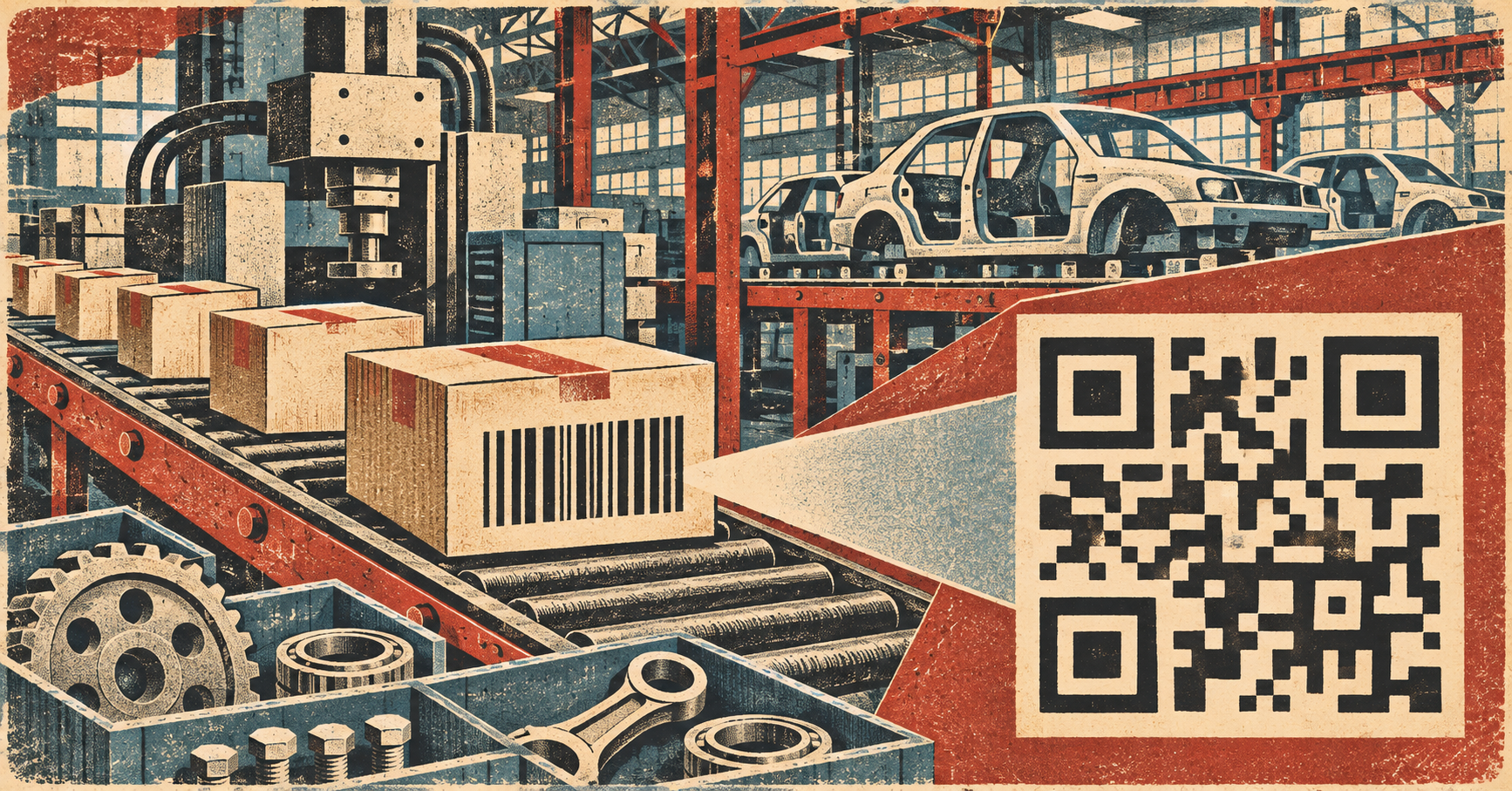
The QR code was developed in Japan by a team led by engineer Masahiro Hara. DENSO WAVE, then a division of DENSO Corporation, announced the code in 1994. It was designed to hold more information than a conventional barcode while being read quickly.
“QR” stands for quick response. The code's first major uses included managing automotive parts and production information. Today, people also encounter QR codes on menus, packaging, signs and phones.
Who invented the QR code?
Masahiro Hara led the development at DENSO WAVE. According to DENSO WAVE's history of the QR code, the development team consisted of Hara and one other member. Their goal was a two-dimensional code that could contain more information and be read rapidly.
DENSO WAVE describes the invention as a response to needs at manufacturing sites. Staff wanted to handle more detailed information without repeatedly scanning several separate barcodes.
Why did manufacturers need a new code?
A conventional one-dimensional barcode encodes information along one direction. A two-dimensional code uses a grid across and down, allowing information to be stored in a compact square. DENSO WAVE's team also wanted the new code to support Japanese characters and remain practical in a busy production environment.
Speed mattered as much as capacity. The three large corner markers on a standard QR code help a reader locate and orient the symbol, making it easier to recognize the pattern from different angles. The design also includes error-correction information that can help recover data when some of the symbol is damaged.
A short QR code timeline
- 1994: DENSO WAVE announces the QR code, developed while it was part of DENSO Corporation.
- 1997–2000: QR code specifications progress through industry, Japanese and international standardization. DENSO WAVE lists ISO approval in 2000.
- 2002: Mobile phones with QR scanning become available, helping people access mobile websites and other information.
- Today: Businesses and individuals use QR codes for a wide range of links and data, from contact cards to product instructions.
DENSO WAVE's 30th-anniversary timeline lists these standardization dates and later milestones.
Why are QR codes useful outside factories?
A QR code lets a printed object carry information a phone can read. A café can link to a menu, a business card can share contact details, and a product package can point to instructions. The code is a convenient starting point; the usefulness of the experience still depends on a readable code and a working destination.
Modern services can also make an editable dynamic QR code by encoding a managed address that redirects to a destination. That does not alter the printed pattern; the owner updates where the managed link leads.
Learn more
For a closer look at scanning, finder patterns and static versus dynamic codes, read how QR codes work. To make one for a website, follow our step-by-step creation guide.